Train your teams for AI,
with a framework that holds up.
The two official Scaled Agile courses, delivered in France under the inspearit banner. Two days for practitioners, three for those leading the change.
Equipping isn't training
Dormant licenses
Rolling out access to an organization that hasn't changed how it works mostly produces unused licenses. The tool doesn't create the skill.
The POC that never scales
A team learns on its own, gets a result, and nothing spreads. What's missing isn't the technology — it's a shared language and a common decision framework.
The gap between those who know and the rest
When upskilling is left to individual initiative, the gap widens instead of closing. Structured training puts everyone back on the same baseline.
Two official courses, two levels
AI-Native Foundations
The common ground. It demystifies AI, machine learning, LLMs and RAG, works through prompt engineering techniques, teaches you to rethink a workflow around AI rather than bolt it on, and sets the conditions for responsible use. The EDGE™ imperative runs through it. At the end, you earn the Certified AI-Native Foundations Professional title and its digital badge, renewable every year.
2 days, in personAI-Native Change Agent
The advanced level, for those who lead the transformation rather than go through it. Foundations is a mandatory prerequisite: you must have completed and passed it to enroll.
3 days, in personBoth courses are official Scaled Agile programs. I deliver them in France under the inspearit banner, the exclusive SAFe AI-Native partner.
What the certification actually changes
A shared language. After the training, a team stops arguing about vocabulary and starts arguing about decisions. That's the most immediate gain — and the least spectacular.
A decision framework, not a toolbox. Knowing when not to use AI is part of the program, and it's often what teams remember first.
External recognition. The title and the badge hold value on the market, independent of the company where you earned them.
Certified trainer, practitioner on assignment
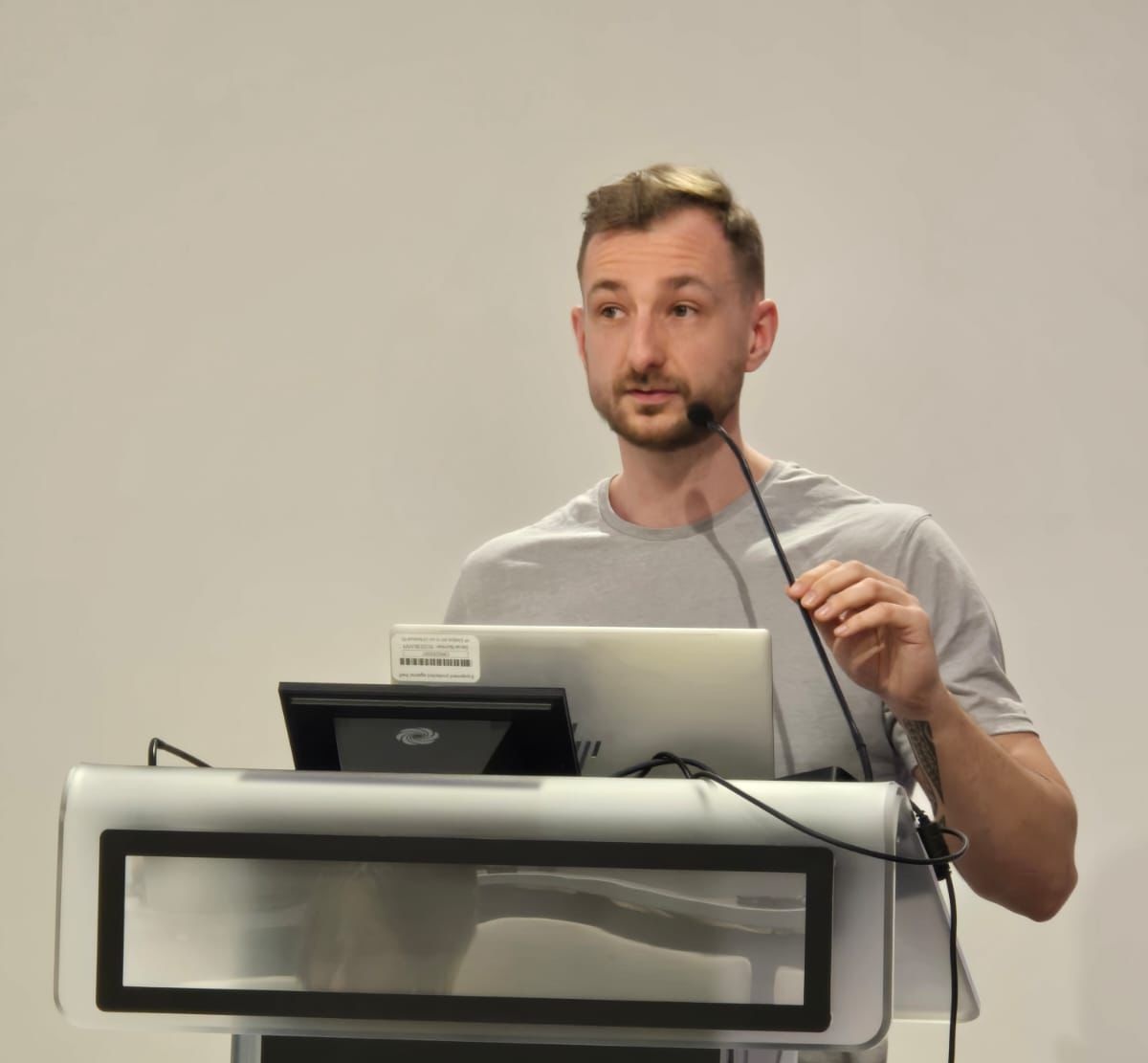
Brian PLUS
I don't teach what I don't practice. The examples worked through in the room come from real engagements at Orange Business, Renault, Allianz and La Poste — not textbook cases.
Certifications
- Certified AI-Native Trainer
- Certified AI-Native Change Agent
- Certified SAFe 6 Release Train Engineer (RTE)
- Certified SAFe 6 Practice Consultant (SPC)
What teams ask before enrolling
Train your teams, or get clarity first?
Thirty minutes is enough to frame the need: which course, for whom, open enrollment or in-house. If the answer is an official public session, I'll point you to the inspearit calendar.